
No Robot Left Behind: How ORVIWO Supports Unmanned Rescue Robots
- Dec 9, 2025
- 5 min read
From battlefield case studies in Ukraine to future missions in Puerto Rico, the Caribbean and LATAM.

No Robot Left Behind
In Ukraine, unmanned ground vehicles are doing something we used to only imagine in sci-fi:
they’re evacuating not just wounded soldiers, but other robots.
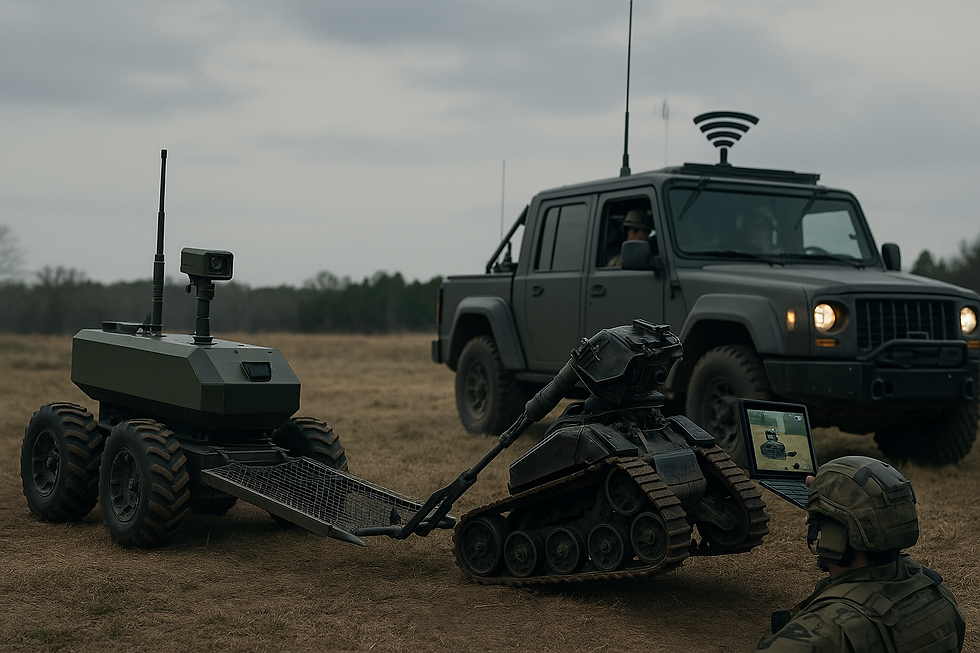
Recent footage from the 93rd Separate Mechanized Brigade shows small ground robots equipped with simple tools like pitchforks and nets dragging “wounded comrades” out of the line of fire. By recovering damaged platforms instead of abandoning them, Ukraine’s forces can:
Salvage expensive and mission-critical components
Deny the enemy access to sensitive technology
Keep their unmanned fleet in the fight longer
This is not just a cool video. It’s a preview of how unmanned logistics, recovery, and sustainment will work in future conflicts and disasters.
And this is exactly where ORVIWO comes in.
ORVIWO is not trying to be the company that builds every robot.
Instead, we focus on building the nervous system, brain, and shield around those robots:
Tactical networks
AI-ready data and analytics
Command-and-control (C2) dashboards
Rugged edge infrastructure
Zero-Trust cybersecurity
Training and doctrine (Neuro-Tactical Intelligence)
1. Tactical Connectivity for Rescue Robots
A rescue robot that can’t communicate is just a remote-controlled toy.
To make unmanned recovery operations work at scale, you need resilient connectivity between:
Ground robots and drones
Tactical vehicles and command posts
Edge computing nodes and cloud/enterprise systems
ORVIWO’s role is to design and integrate those networks using a mix of:
4G/5G and private LTE
SATCOM backhaul for remote or disrupted areas
RF and mesh networking for local resilience
Multi-band tactical antennas and field-proven hardware
We design architectures where each robot, vehicle, and command node can:
Fail over between links (e.g., 5G → SATCOM → local mesh)
Prioritize critical traffic (e.g., rescue status, tele-operation video)
Operate even when parts of the network are degraded or contested
In other words, we turn the unmanned rescue fleet into a network-aware, resilient collective, not a set of isolated gadgets.
2. Turning Every Mission into Data for the Next One
Every rescue mission—especially those under fire—is a training dataset for the next generation of robots and tactics.
Unmanned platforms generate:
Video and thermal imagery
Telemetry (battery, motor load, damage indicators)
Positioning and timing (routes, obstacles, delays)
System events (link drops, sensor failures, near misses)
ORVIWO builds AI-ready data pipelines so none of that goes to waste:
Collect and normalize data from robots, drones, vehicles, and fixed sensors
Store it in secure data lakes or edge repositories
Feed it into AI/ML models that can:
Optimize routes and behaviors
Detect patterns in damage and failures
Recommend design improvements and new tactics
This AI layer can help commanders answer questions like:
Which robot types survive best in specific terrain?
What approach corridors are most dangerous?
How much time do we really save using autonomous rescue vs. manual methods?
The result: each mission makes the entire unmanned ecosystem smarter, safer, and more efficient.
3. Command & Control Dashboards for Unmanned Recovery
When you deploy multiple robots, vehicles, and sensors, you need orchestration, not chaos.
ORVIWO designs Command-and-Control (C2) dashboards that give decision-makers a clear picture of:
Which robots are healthy, damaged, or offline
Which units are requesting rescue
Where rescue platforms are located and how fast they can respond
What’s happening around them in real time (video, alerts, maps)
Different roles get different views:
Frontline squads see a simple interface: nearby robots, rescue options, and quick commands.
Battalion/brigade staff see an operational layer: live statuses, heat maps of losses, trends.
Logistics and maintenance teams see component-level data: what can be salvaged, what needs replacement, and how to optimize spare parts.
This is how you move from “cool robot demo” to a sustainable unmanned recovery system.
4. Tactical Vehicles as Mobile Unmanned Support Nodes
Robots don’t operate in a vacuum—they need mobile hubs to recharge, update, and coordinate.
ORVIWO’s Tactical Command Vehicle concept (e.g., based on rugged platforms like the Toyota FJ Cruiser) can be adapted into a:
“Mobile Unmanned Systems Support Node”
Inside that vehicle, we integrate:
Tactical routers and multi-WAN connectivity (cellular, SATCOM, Wi-Fi, RF)
Rugged tablets and laptops for operators
Edge compute servers for local AI processing and data storage
Mounting systems, power management, and protected networking
From that vehicle, a small team can:
Launch, supervise, and recover ground robots and drones
Monitor live C2 dashboards
Run AI models locally when cloud connection is limited
Act as a field maintenance and recharge point for unmanned assets
For disaster response in Puerto Rico, the Caribbean, and LATAM—earthquakes, hurricanes, floods—this same architecture can support search-and-rescue robots and unmanned inspection teams.
5. Zero-Trust Security for Robot Fleets
The only thing worse than losing a robot is having it hacked.
When robots are operating near critical infrastructure, in contested zones, or alongside military units, the risk is not just physical—it’s digital:
Intercepted or spoofed commands
Compromised video and sensor data
Stolen firmware or captured AI models
ORVIWO brings Zero-Trust security concepts to unmanned systems:
Strong identity for every robot, vehicle, and operator
Encrypted communications across all links
Segmentation and policy enforcement so one compromised unit doesn’t compromise all
Secure update and patching pipelines (signed images, verified OTA updates)
This reduces the attack surface and ensures unmanned rescue and recovery operations remain trustworthy and resilient, even in hostile environments.
6. Doctrine, Training, and Neuro-Tactical Intelligence (NTI)
Technology alone is not enough. Units need clear doctrine and human-centric training to use it well.
ORVIWO’s Neuro-Tactical Intelligence (NTI) framework adds a human and cognitive dimension:
When do we send robots instead of humans?
How do we prioritize rescues (humans, high-value robots, critical sensors)?
How do we manage operator stress and cognitive load when supervising multiple platforms?
We help agencies and defense partners with:
Standard Operating Procedures (SOPs) for unmanned rescue missions
Checklists and playbooks for commanders and operators
Training programs that combine technical skills with mental readiness and decision-making under pressure
The goal is simple: make unmanned rescue operations effective, ethical, and sustainable.
7. What This Means for Puerto Rico, the Caribbean, and LATAM
While the most visible examples may come from Ukraine’s battlefields, the lessons apply directly to:
Civil defense and emergency management
Coastal and port security
Critical infrastructure protection (energy, water, telecoms)
Border and maritime surveillance
In hurricanes, earthquakes, industrial accidents, or security incidents, unmanned systems will be asked to:
Reach dangerous or unstable areas first
Recover damaged sensors, robots, and equipment
Keep human responders out of the highest-risk zones
ORVIWO’s mission is to bring this next generation of resilient, AI-enabled, unmanned infrastructure to Puerto Rico, the wider Caribbean, and LATAM—aligned with both civilian needs and defense partners.
Conclusion: ORVIWO’s Role in “Robot Rescues Robot” Programs
To summarize, ORVIWO collaborates in this kind of project by:
Designing the tactical networks that connect robots, vehicles, and command posts
Building AI-ready data pipelines so every mission makes the next smarter
Delivering C2 dashboards for full situational awareness and orchestration
Integrating tactical vehicles and field kits as mobile support nodes
Implementing Zero-Trust cybersecurity for robot fleets
Providing doctrine, SOPs, and NTI-based training for operators and commanders
We don’t just want to watch videos of robots rescuing robots—we want to help build the infrastructure, intelligence, and discipline that make those operations real, repeatable, and reliable for our partners.
If your organization is exploring unmanned systems for rescue, recovery, or critical infrastructure protection, ORVIWO is ready to collaborate.


$50
Product Title
Product Details goes here with the simple product description and more information can be seen by clicking the see more button. Product Details goes here with the simple product description and more information can be seen by clicking the see more button

$40
Product Title
Product Details goes here with the simple product description and more information can be seen by clicking the see more button. Product Details goes here with the simple product description and more information can be seen by clicking the see more button
$50
Product Title
Product Details goes here with the simple product description and more information can be seen by clicking the see more button. Product Details goes here with the simple product description and more information can be seen by clicking the see more button.
$50
Product Title
Product Details goes here with the simple product description and more information can be seen by clicking the see more button. Product Details goes here with the simple product description and more information can be seen by clicking the see more button.


Comments